
Protracted Displacement Solutions
Refugees typically remain displaced for an average of 20 years – and often for multiple generations.
The breakdown of traditional foreign assistance and humanitarian and development aid is an opportunity to transform a broken system of prolonged camps-based settings where millions struggle to survive – let alone thrive – to one where political, legal and financial systems facilitate inclusion. Jobs, education, freedom of movement, documentation, and access to finance and property become the norm rather than the exception as those experiencing forced displacement are able to contribute meaningfully in their new homes.
We are building political consensus and financial support around a new, more sustainable and inclusive model to address long-term displacement. By co-creating a new financing instrument — the Global Facility for Economic Inclusion (GFEI) — and partnering with locally-led stakeholders, our ambition is systemic change: to shift from a model of short-term humanitarian financing and parallel systems to outcome-based financing that incentivizes governments to include refugees in their social, economic, and financial systems.
A system never designed for the long term
Protracted refugee displacement often lasts up to 20 years, yet the international response has been dominated by short-term, emergency humanitarian financing, delivered through systems that were not designed to address protracted displacement in semi-permanent settlements. This approach is expensive, inefficient, and ultimately fails both refugees and host countries.
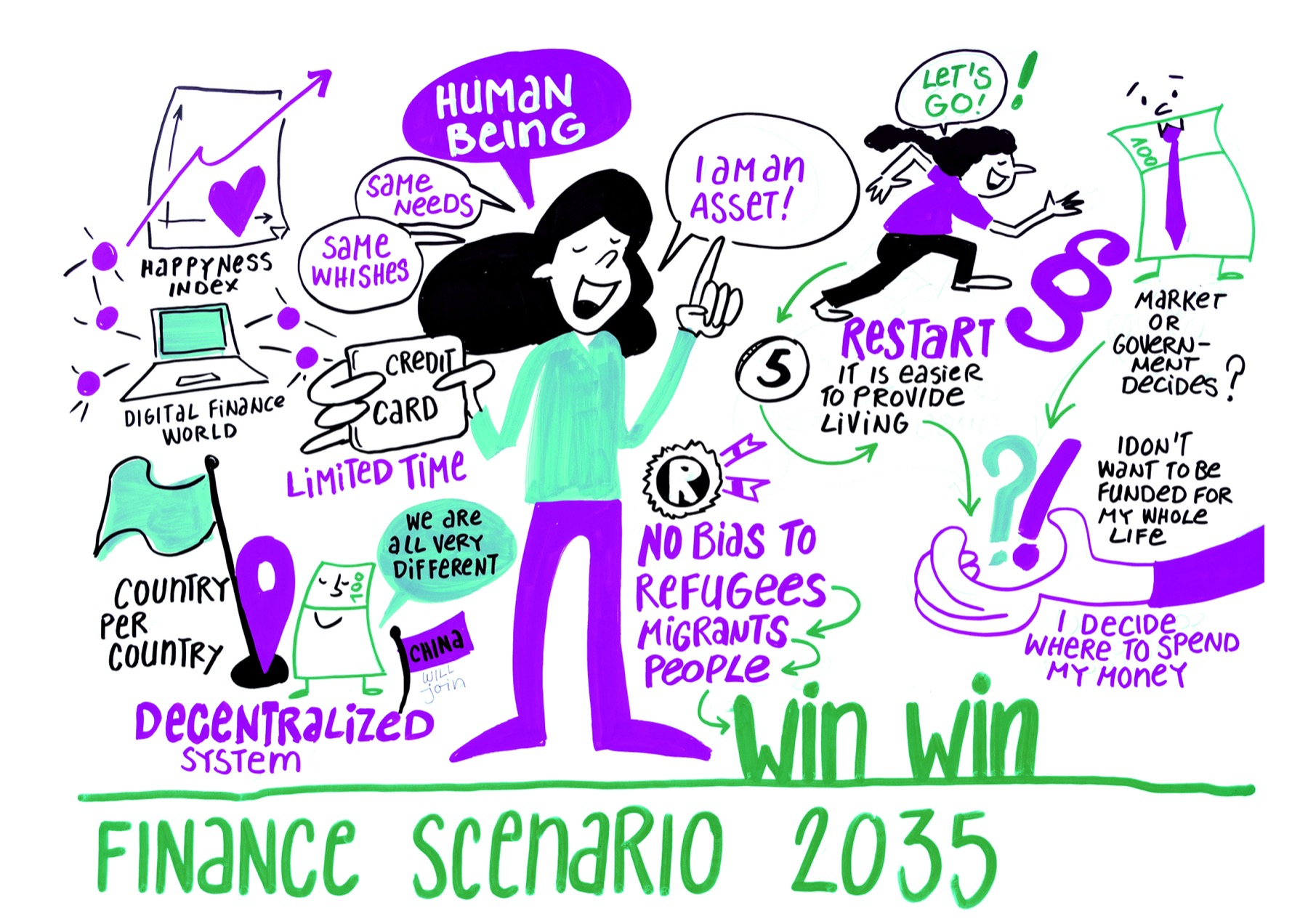
Systemic change, in the very near term
By mobilizing private sector investment, development finance, and cross-sector partnerships, our approach advances a sustainable framework of economic inclusion that leads to shared prosperity for both crisis-affected people — who are agents of their own recovery — as well as host countries and communities. Our ambition is systemic change.
Building a Global Facility for Economic Inclusion
In April 2026, CoAction Global and the German Agency for International Cooperation GIZ’s Refugee Inclusion Accelerator hosted a symposium in Berlin, bringing together leaders across governments, international development finance, the private sector, civil society and philanthropy to advance the ideas behind this initiative into concrete action. As we move this project forward, we welcome interested stakeholders joining our effort.